Electrolysis vs. Laser Hair Removal: Differences and How to Choose
10 min read
If you’re tired of shaving or waxing the same areas over and over, two treatments usually come up next: electrolysis and laser hair removal. Both aim at the hair follicle rather than the hair you see, yet they work differently, suit different hair, and fit different plans.
Electrolysis vs laser hair removal comes down to how each one reaches the follicle. Electrolysis sends an electrical current into one follicle at a time and works on all hair types, including light-colored hair. Laser relies on light that hair pigment absorbs, so it can’t effectively target blonde, white, gray, or red hair. Both take several sessions.
Below, we compare the two on hair and skin type, sessions, comfort, risks, and who performs them in New York, with a table and common scenarios to help you decide. If you’re curious about learning either technique, that’s covered too.
How Each Method Reaches the Hair Follicle
Electrolysis: One Follicle at a Time
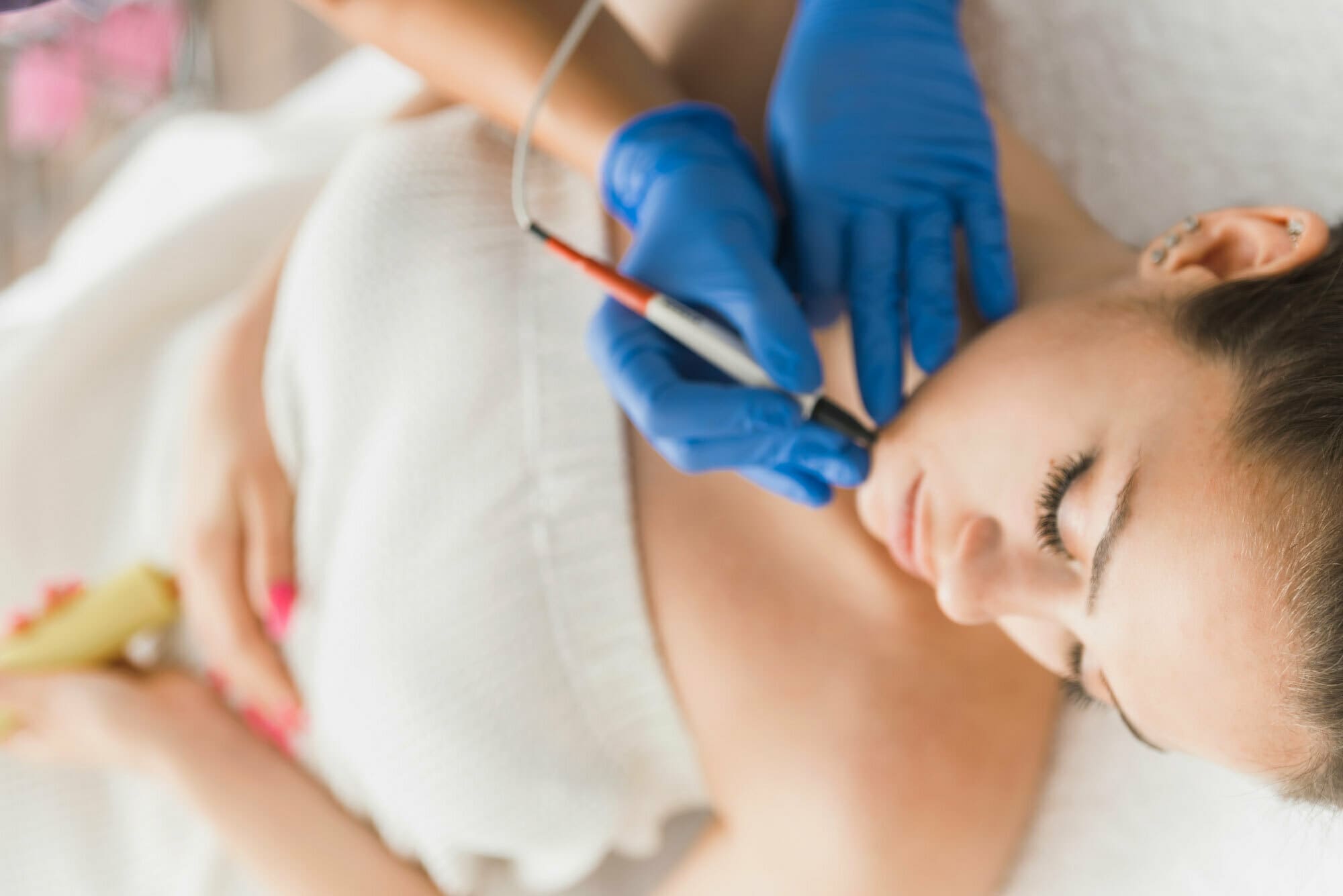
In electrolysis, a provider inserts a fine probe into a hair follicle and applies a small electrical current. As the American Academy of Dermatology (AAD) explains, the current damages the follicle and prevents hair from growing. Because each hair is treated individually, the number of hairs in an area shapes how long a session takes.
Laser: Light Absorbed by Hair Pigment
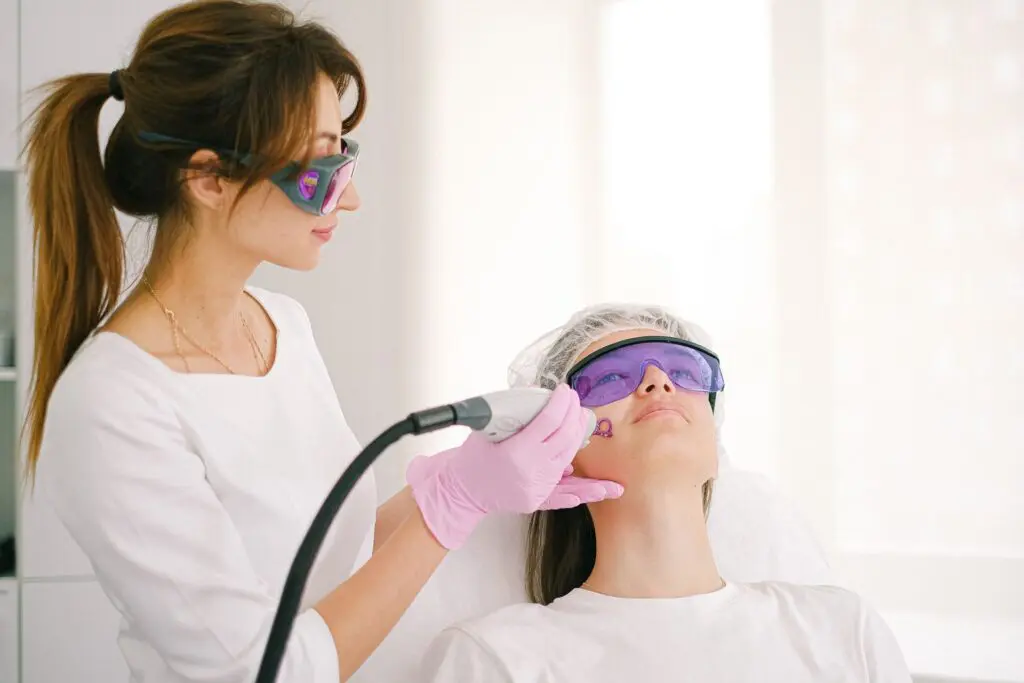
Laser hair removal works through pigment. According to the AAD, the laser emits a beam of light that the pigment in your hair absorbs, and over time this can destroy the follicle. The FDA 510(k) summary for the Candela GentleMax Pro Plus describes a high-intensity beam that delivers a controlled amount of heat deep in the skin, while a burst of cryogen cools and protects the upper layers.
The FDA treats the two devices differently. Its product classification database lists needle-type epilators, used for electrolysis, as Class I devices exempt from premarket notification. GentleMax lasers are Class II, and their clearance uses the term permanent hair reduction, which we unpack in our article on whether laser hair removal is permanent.
Laser Hair Removal vs. Electrolysis at a Glance
Here is how the two compare on the points people ask about most, based on AAD guidance and FDA records:
| Electrolysis | Laser hair removal | |
|---|---|---|
| How it works | A fine probe and electrical current, one follicle at a time | Pulses of light absorbed by the pigment in hair |
| Hair color | All hair types, including light-colored hair | Works best on dark hair; can’t effectively target blonde, white, gray, or red hair |
| Skin tone | People with darker skin tones can develop keloids (raised scars) | All skin tones, with a provider experienced in treating yours |
| Sessions | Several, because hair grows in cycles | Most patients need 2 to 6 treatments |
| Maintenance | None, once the hair is gone | Touch-ups may be needed; results are not permanent on a woman’s face |
| How it feels | A stinging sensation each time a hair is treated | Often described as warm pinpricks or a rubber band snap |
| Main risks | Infection from unsterile probes; scarring and burns in inexperienced hands | Burns, blisters, infection, or dark spots in inexperienced hands |
| FDA device class | Class I (needle-type epilator) | Class II (for example, the GentleMax family) |
Hair Color and Skin Tone Come First
If your unwanted hair is blonde, white, gray, or red, the decision is mostly made for you. The AAD says laser hair removal won’t work on these colors, while electrolysis works on all hair types. If your hair is a mix, such as dark hair with some gray, ask a provider how they would handle the lighter hairs.
Skin tone matters for both treatments, in different ways. The AAD notes that people of all skin tones can safely have laser hair removal when the person performing it has experience with their skin tone. The GentleMax family’s clearance covers all six Fitzpatrick skin types, a scale that classifies skin by how it responds to the sun.
For electrolysis, the AAD warns that people with darker skin tones can develop keloids, a type of raised scar. Whichever treatment you lean toward, ask how many treatments the provider has performed on skin like yours.
Sessions, Results, and Maintenance
Neither treatment is a one-visit fix. The AAD explains that electrolysis takes several sessions because hair grows in cycles. It also says electrolysis can permanently remove unwanted hair, and that once the hair is gone, you won’t need maintenance treatments.
For laser, the AAD’s laser hair removal FAQs say most patients need 2 to 6 treatments and may need additional maintenance treatments to keep an area clear. The AAD also notes that hair grows back thinner and finer after each treatment, and it describes results as permanent on most areas of the body, except on a woman’s face, because of hormones.
In practice, electrolysis trades a hair-by-hair process for no upkeep, while laser may call for occasional touch-ups. Sessions for either depend on your hair, the area, and how your skin responds, so ask for a written treatment plan.
Comfort, Downtime, and Risks
How a treatment feels is personal, and no provider can promise you a particular sensation. The AAD reports that some people find electrolysis uncomfortable or painful because they feel a stinging sensation each time a hair is treated. For laser, many patients describe the pulses as warm pinpricks or a rubber band snapped against the skin.
According to the AAD, neither treatment has downtime. After laser, keep the treated area covered and out of the sun until the skin heals. The risks depend heavily on who is treating you:
- Electrolysis: unsterile probes can cause a skin or blood infection, and inexperienced hands can cause scarring and burns.
- Laser: an inexperienced provider can cause burns, blisters, infection, or dark spots.
Who Performs Each Treatment in New York
In New York, the two treatments sit in different places. The Department of State’s Procedure Licensure Chart lists laser hair removal under the cosmetology and esthetics licenses and notes that any other use of lasers is the practice of medicine. The Department’s consumer guide adds a caution: laser hair removal services are not regulated by New York State.
Electrolysis does not appear on that chart, which says it is not meant to cover every procedure, and our Electrolysis Training Workshop page states that New York currently has no state licensing requirement to perform electrolysis. The AAD recommends a board-certified dermatologist for laser treatments and a board-certified dermatologist or board-certified electrologist for electrolysis. Whoever you choose, ask about their training and sanitation.
If You’re Deciding Which Technique to Learn
At Atelier Esthétique Institute of Esthetics in Chelsea, Manhattan, our Laser/IPL Hair Removal course is an advanced course approved by the New York State Education Department (NYSED). It can be completed in as little as 5 days, with lectures and hands-on practice on live models using the Candela GentleMax Pro.
Students who complete it receive two New York State Education Certificates, one in Laser/IPL Hair Removal Theory and Treatment and the other in Laser Safety Officer Training; neither is a license. Eligible students include licensed estheticians and cosmetologists experienced in skin care; licensed RNs, LPNs, physician assistants, and physicians; certified electrologists; licensed massage therapists; and licensed acupuncturists. Our laser hair removal technician guide covers the full path.
Electrolysis training is a workshop hosted at Atelier Esthétique Institute of Esthetics, although it is not approved by NACCAS nor licensed by the State of New York. The Electrolysis Training Workshop totals 120 hours, 34 of which are theory and 86 of which are hands-on practical training, covers the galvanic, thermolysis, and blend methods, and ends with a certificate from the instructor.
Hosted workshops are intended for licensed professionals: the overview asks participants to hold an esthetician license or another professional license, with exceptions for graduate students or students in their last quarter of study in those fields. Confirm eligibility with our admissions team before you plan around it.
If you don’t hold a license yet, waxing school offers a focused way into professional hair removal. Our 75-hour NY Waxing licensing course prepares students for the New York waxing license, uses Cirepil soft and hard wax, and requires no prior experience. It can be completed in as little as 2 weeks full-time, or in as little as 5 weeks on the evening or weekend schedules.

So, Which One Should You Choose?
In the laser vs. electrolysis decision, there is no single winner, only a better fit for your hair, skin, and goals. Drawing on the AAD guidance above, here is where common situations tend to point:
- Blonde, white, gray, or red hair: electrolysis, since lasers cannot effectively target light-colored hair.
- Dark hair across a larger area, such as the legs: laser is worth considering, since it works through pulses of light rather than one follicle at a time, as long as your provider has experience with your skin tone.
- A few stray hairs, or what’s left after laser: electrolysis lets a provider treat individual hairs, including light ones a laser can’t target.
- You have a tan right now: the AAD advises waiting until a tan fades completely before laser hair removal, so plan laser sessions with that in mind.
- No upkeep afterward is your priority: the AAD says electrolysis needs no maintenance once the hair is gone, while lasers may call for touch-ups.
- A history of keloids or raised scars: bring it up before either treatment, since the AAD flags keloids as an electrolysis risk for darker skin tones.
If waxing is still in the running, our overview of how waxing compares with laser and electrolysis covers all three. Whichever way you lean, start with a consultation where a qualified provider can look at your hair and skin in person.
And if this comparison has you thinking about offering hair removal yourself, Book a Tour of our campus in Chelsea to see where our laser students train and talk through which path fits you.
Thinking about starting your esthetics career?
Book a TourFrequently Asked Questions
The AAD says electrolysis can permanently remove unwanted hair, and that once the hair is gone, you won’t need maintenance treatments. Getting there takes several sessions, because hair grows in cycles and each follicle is treated individually. Results also depend on the provider’s skill, so the AAD recommends a board-certified dermatologist or board-certified electrologist.
Time and comfort are the main trade-offs: electrolysis treats follicles one by one over several sessions, and some people feel a stinging sensation with each hair. The AAD also lists risks: unsterile probes can cause skin or blood infections, inexperienced hands can cause scarring and burns, and people with darker skin tones can develop keloids.
It depends on your hair color and goals. The AAD notes that laser results are not permanent on a woman’s face because of hormones, and that lasers can’t effectively target blonde, white, gray, or red hair. Electrolysis works on all hair types and can permanently remove hair, though it treats one follicle at a time. A consultation can help you weigh both.
Home kits exist, but they work differently from professional treatment. According to the AAD, at-home electrolysis kits don’t involve inserting probes into hair follicles, which is how professional electrolysis works. The AAD is cautious about at-home lasers too: it advises seeing a dermatologist first, and notes these devices need longer use and periodic sessions to maintain results.
There’s no single answer, because prices vary by provider, treatment area, and the number of sessions you need. With electrolysis, the size of the area and the number of hairs affect the total; laser is planned as a series of sessions. The AAD notes that insurance does not cover laser hair removal, so ask for a written estimate.