Is Laser Hair Removal Permanent? What Estheticians Want You to Know
10 min read
Before booking a series of laser sessions, most people ask the same thing: will the hair ever come back? It’s a fair question, and it deserves a straight answer from the treatment-room side rather than a sales pitch.
Is laser hair removal permanent? Not completely. The FDA’s term for what hair removal lasers achieve is permanent hair reduction: a long-term, stable drop in the number of hairs that grow back, not the removal of every hair. After a full series, most people stay hair free for months or even years, and some need touch-ups.
Below, we explain what those two terms mean, why it takes a series of sessions, what shapes your results and maintenance, and why the person holding the laser matters. If you love skincare and wonder what it would take to offer this service one day, that side of the story is here too.
Permanent Hair Reduction vs. Permanent Hair Removal
These two phrases sound almost identical, but they describe very different results. In its consumer information on lasers, the FDA explains that manufacturers received permission to claim “permanent reduction,” not “permanent removal,” for their hair removal lasers. Treatment with these devices can permanently reduce the total number of hairs, but it will not remove all hair for good.
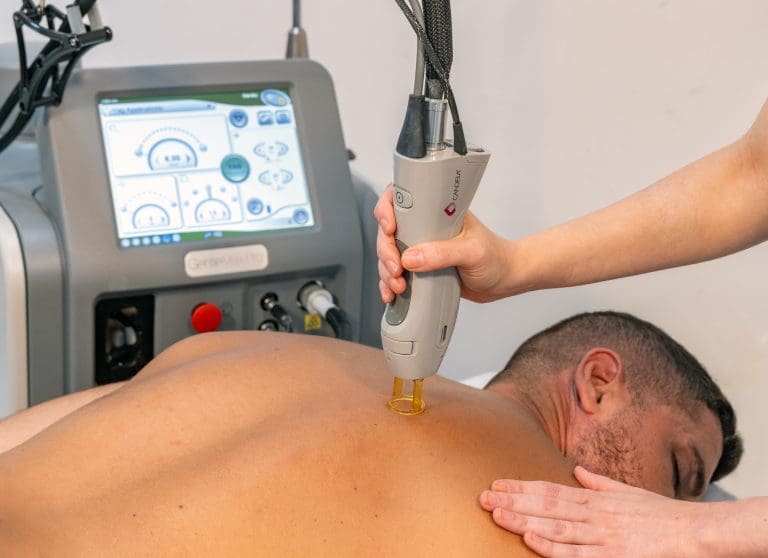
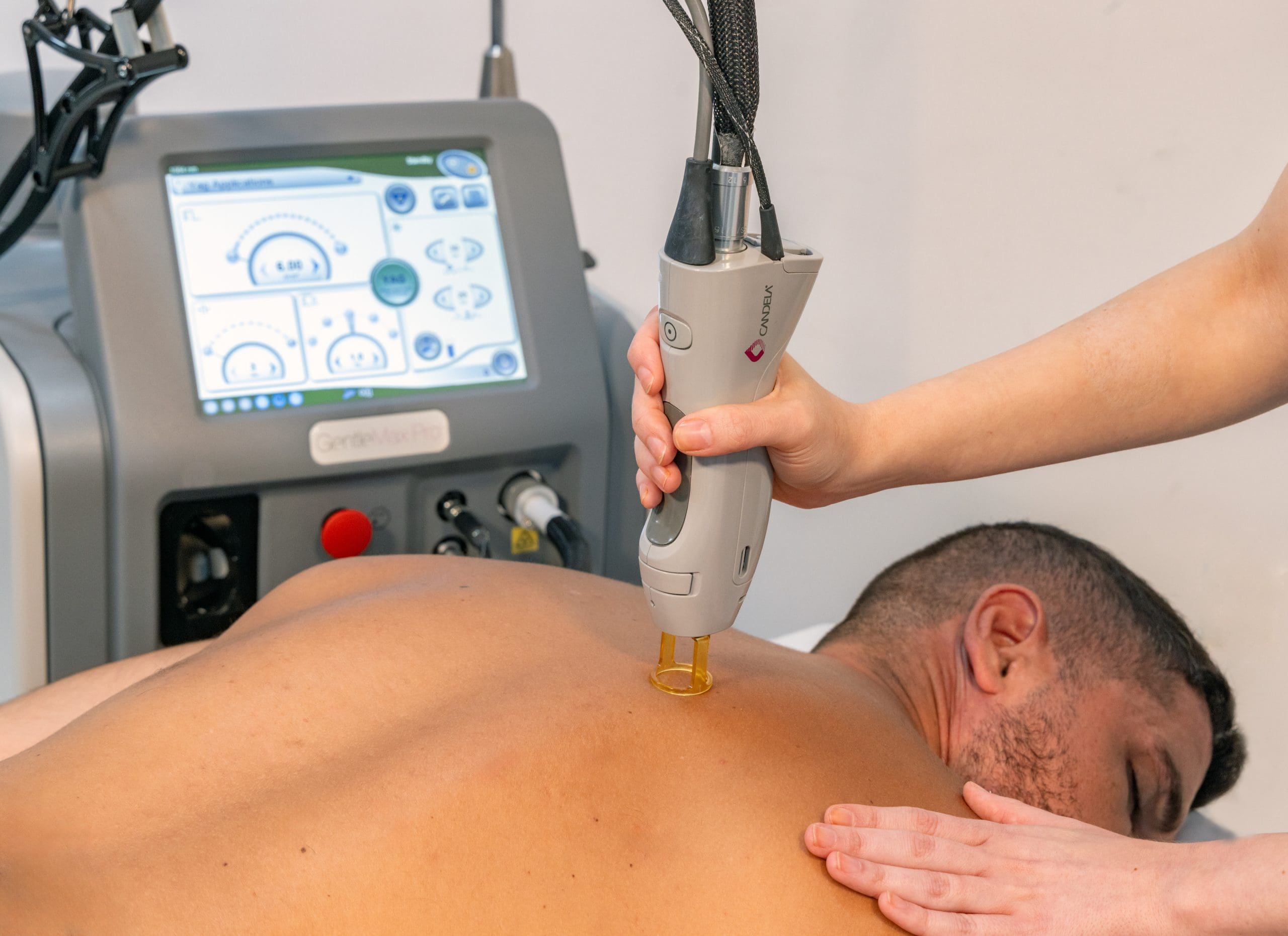
FDA clearance documents define the term precisely. For the Candela GentleMax family of lasers, which includes the GentleMax Pro our students train on, permanent hair reduction is defined as a long-term, stable reduction in the number of hairs regrowing when measured at 6, 9, and 12 months after the completion of a treatment regime. In plain terms, fewer hairs come back and that reduction holds over time. It does not mean the area will never grow another hair.
For an esthetician, this distinction shapes the whole consultation. A client who expects zero hair may feel let down by a result that is actually good. A client who hears “fewer, finer hairs, with possible touch-ups” knows what success looks like before the first session. If you’re still weighing your options, our guide to laser, waxing, and electrolysis compares the three methods.
Why Laser Hair Removal Takes a Series of Sessions
Laser hair removal works by targeting pigment. The GentleMax clearance describes it as selective targeting of melanin in hair follicles: pigment in the follicle absorbs the light, and that energy destroys the hair. For the physics behind wavelengths and laser types, see our post on the science behind laser hair removal.
Timing is what turns one treatment into a series. Hair grows in cycles, and the hairs in one area are not all at the same stage at once. The American Academy of Dermatology (AAD) lists where the hair is in its growth cycle among the factors that decide how well treatment works, and notes that removing hair often requires a series of laser treatments. Most patients can have laser hair removal once every 4 to 6 weeks, and the provider decides when the next session is safe. It also means permanence is judged after a full series, not after one appointment: the FDA definition measures regrowth only after a treatment regime is complete.
Each visit is also a reassessment. Between sessions, a trained provider checks how the skin responded, adjusts the laser settings, and records them in the client’s chart, which is part of what students practice during hands-on laser training.
How Long Does Laser Hair Removal Last?
Results vary, but dermatology sources describe a consistent pattern. According to the AAD, people can expect a 10% to 25% reduction in hair after the first treatment, and most patients need 2 to 6 treatments. After finishing the series, most patients don’t see hair on the treated skin for several months or even years.
When hair does regrow, there tends to be less of it, and the hairs tend to be finer and lighter in color. The AAD also notes that most patients see some regrowth and that maintenance treatments may be needed to keep an area clear.
You may read that laser results are permanent on most of the body. The AAD’s overview page says so, with one exception: because of hormones, results are not permanent on a woman’s face. Both views fit the FDA wording, since the reduction can last a long time while some hair may still return. The realistic goal is less frequent hair removal with occasional touch-ups, not zero hair forever.
What Shapes Your Results and Maintenance
Two people can follow the same plan and get different results. The AAD names the main variables: the color and thickness of your hair, the area treated, the type of laser used, and the color of your skin. Here is how they play out in practice:
- Hair and skin color: because the laser targets pigment, it works best on light-colored skin with dark-colored hair. The AAD notes that it is also an option for people with light hair and light skin and for people with dark skin, but it must be performed very carefully in these cases.
- Hair thickness and the area treated: both affect the outcome. On a woman’s face, hormones are the reason the AAD does not describe results as permanent.
- The laser and its settings: in laser training, students learn to choose wavelengths and settings based on the Fitzpatrick Scale, a way of classifying skin types.
- Before- and after-care: the AAD advises avoiding tanning, indoors and out, skipping sunless tanners, protecting treated skin from the sun, and following your provider’s instructions to lower the risk of side effects.
Maintenance belongs in an honest treatment plan, not in the fine print. If some hair returns months later, the treatment hasn’t necessarily failed; that is the difference between reduction and removal in action. Your provider can tell you when a touch-up session is safe.
Who Performs the Treatment Matters
The person holding the laser affects both your results and your safety. The AAD warns that laser hair removal can be dangerous in inexperienced hands, with possible burns, permanent changes to skin color, and scars, and it recommends choosing a board-certified dermatologist to perform laser treatments.
Whoever you see, a careful provider starts with a consultation. These questions, adapted from the AAD’s consultation checklist, can help you prepare:
- Who will perform the treatment, and what training do they have?
- How many of these treatments have they performed on people with my skin coloring?
- How many sessions will I need, and what results can I expect?
- What are the potential side effects, and am I at higher risk for any of them?
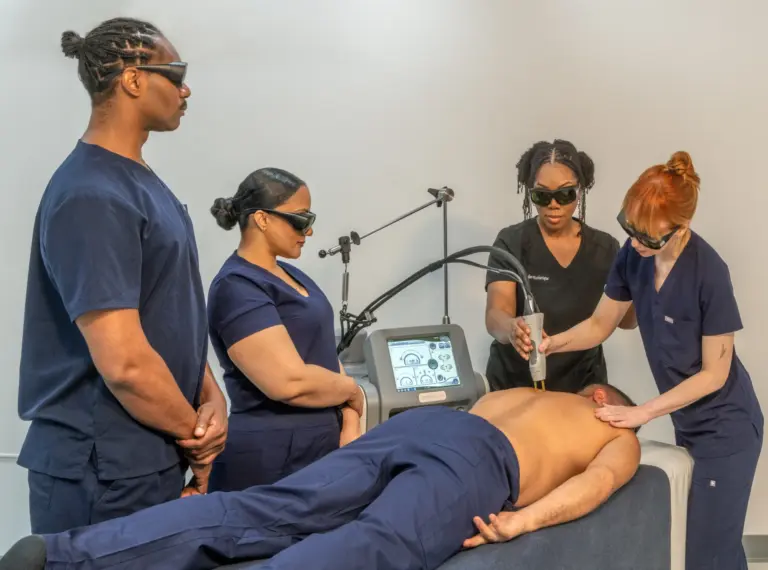
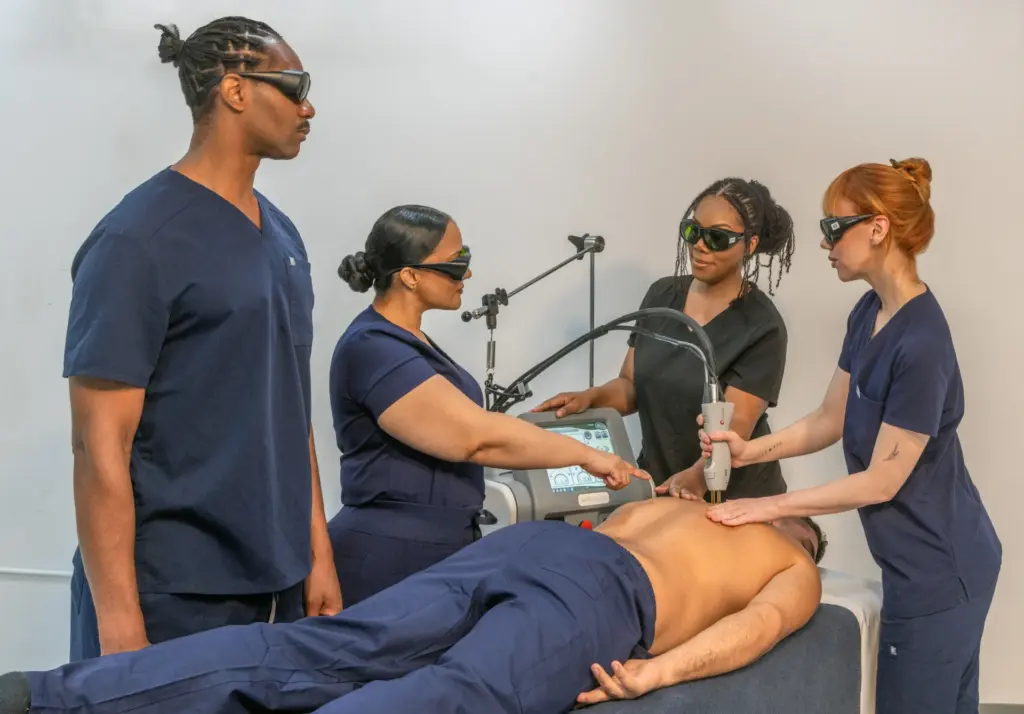
The AAD also suggests telling your provider about any tendency to scar, a recent tan, a history of cold sores, and any medicines you take. On the professional side, this is what laser training is built around: client assessment, indications and contraindications (reasons to treat or not to treat), pre- and post-care, and laser safety, including the rule that everyone in the treatment room wears protective eyewear.
Laser Hair Removal Side Effects
Knowing the side effects is part of setting realistic expectations. According to the AAD, the most common ones are minor and last 1 to 3 days: discomfort, swelling, and redness. Right after a session, treated skin often looks like a mild sunburn.
Other possible side effects are rare when laser hair removal is performed by a dermatologist or under a dermatologist’s direct supervision. They include blistering, cold sore outbreaks, infections, scarring, and skin lightening or darkening. Skin color tends to return to normal in time, but some changes to skin color are permanent.
This is where the word “permanent” deserves the most care: the hair reduction is described cautiously, while a change in skin color can be the part that lasts. Following before- and after-care instructions and seeing a skilled provider are the two things the AAD highlights to lower that risk.
Curious About Offering Laser Hair Removal?
If skincare is your passion, the permanence question may have you thinking about the other side of the treatment room. At Atelier Esthétique Institute of Esthetics in Chelsea, Manhattan, our Laser/IPL Hair Removal course is a 5-day advanced course approved by the New York State Education Department (NYSED). Students learn through lectures and hands-on practice with live models on the Candela GentleMax Pro.
Students who complete the course receive two New York State Education Department certificates: Laser and Intense Pulsed Light (IPL) Hair Removal Theory and Treatment, and Laser Safety Officer Training. These certificates document training; they are not a professional license. The course is open to people who already hold one, including licensed estheticians and cosmetologists experienced in skin care, RNs, LPNs, physician assistants, physicians, certified electrologists, licensed massage therapists, and licensed acupuncturists.
Not licensed yet? Starting at waxing school is a practical first step into professional hair removal. Our 75-Hour NY Waxing licensing course prepares students for the New York waxing license, with half theory and half practice, Cirepil soft and hard wax, and topics such as facial and body waxing, skin types, client consultation, and sanitation. It can be completed in as little as 2 weeks on the Full-Time schedule, or in as little as 5 weeks on the Part-Time Evenings or Weekends schedules, and no prior experience is needed.
To see where our laser and waxing students train and bring your questions in person, Book a Tour of our campus in Chelsea, Manhattan.
Thinking about starting your esthetics career?
Book a TourFrequently Asked Questions
Some hair often does. The American Academy of Dermatology notes that most patients see some regrowth after a series of treatments, but there tends to be less hair, and it tends to be finer and lighter in color. Maintenance laser sessions can help keep an area clear, and your provider can tell you when it is safe to schedule them.
According to the American Academy of Dermatology, laser hair removal is not permanent on a woman’s face because of hormones, and treatment can be repeated when hair regrows. Facial results also depend on hair color and thickness, skin color, and the laser used, so a consultation is the place to set realistic expectations for that area.
The Candela GentleMax family of lasers is cleared by the FDA for permanent hair reduction, defined as a long-term, stable reduction in the number of hairs regrowing, measured at several points up to a year after a treatment regime is complete. That means fewer hairs grow back over time; it does not mean every hair in the area is gone for good.
The main drawbacks are time and expectations: it takes a series of sessions, some hair may regrow, and maintenance treatments may be needed. According to the AAD, common side effects such as discomfort, swelling, and redness usually last 1 to 3 days. Rarer risks include blistering, scarring, and changes in skin color, which in some cases are permanent.
Expect a reduction rather than removal of every hair, a series of sessions, and possible touch-ups. The AAD recommends a consultation first: ask who will perform the treatment, how many sessions you’ll need, and which side effects to expect, and mention any tendency to scar, a recent tan, a history of cold sores, or medicines you take.