
Accredited Esthetician School Near Me: How to Verify a School in NYC
10 min read
Searching for an accredited esthetician school near me in New York usually means you want two things: a campus you can reach several days a week, and proof that the training is legitimate. A map result answers the first question. For the second, you need official sources.
The short answer: check two credentials separately. A private career school’s state license comes from the New York State Education Department’s Bureau of Proprietary School Supervision (BPSS), and you can confirm it in the BPSS school directory. Accreditation is a separate review by an agency such as NACCAS, which you can confirm in its Accredited School Search.
This guide explains what each credential covers and what it does not, how to look a school up step by step, why accreditation matters for federal student aid, and what else to compare once the paperwork checks out.
Licensed vs. Accredited: What Each Credential Means
The two words are often used as if they meant the same thing. They come from different organizations, they answer different questions, and neither one is the license you will need to work. Compare all three:
| School license | Accreditation | Your esthetics license | |
|---|---|---|---|
| Who grants it | New York State Education Department, Bureau of Proprietary School Supervision (BPSS) | An accrediting agency, such as NACCAS | New York Department of State, Division of Licensing Services |
| Who holds it | The school | The school | You |
| What it confirms | The state allows the private career school to operate | The school meets the agency’s standards | You may provide esthetics services for pay in New York |
BPSS oversees non-degree-granting private career schools in New York. It licenses those schools, credentials their teachers, and investigates student complaints. NACCAS, the National Accrediting Commission of Career Arts & Sciences, is recognized by the U.S. Department of Education as a national accrediting agency for schools of cosmetology arts and sciences. A school becomes accredited after the Commission reviews information from the school and the report of a team that visits and evaluates it.
Two details keep expectations realistic. First, NACCAS explains on its What Is NACCAS page that accredited schools meet a common set of minimum standards, and that the Commission does not try to rank accredited schools against each other. Accreditation is a fact to verify, not a verdict on which school suits you.
Second, the Department of State asks for 600 hours of New York State-approved schooling and passing scores on its written and practical exams; its license requirements do not mention accreditation. Your school’s director confirms your approved schooling on your license application. Our guide to the esthetician license in New York covers that application and the exams in detail.
How to Check a School’s New York State License
BPSS publishes a free public directory. Its “Is Your School Licensed?” page links to that directory and advises students to confirm that a private career school is licensed before enrolling. The check takes a few minutes:
- Open the BPSS school directory from that page and choose to search by school.
- Type the school’s name as it appears on its catalog or enrollment agreement. The legal name can differ from the one on a sign or an ad.
- Check that the address in the result matches the campus where you would take classes.
- If you want to confirm that instructors hold a teacher license, search the same directory by teacher name.
- If something does not match, contact BPSS before you sign anything. The bureau can tell you whether a school is licensed and whether complaints have been filed against it.
How to Check NACCAS Accreditation
NACCAS keeps its own Accredited School Search. You can search by school name, city, state, and program category, and the categories include esthetics.
- Select New York as the state and, if you like, Esthetics as the program category.
- Add your city, or search by the school’s name.
- Look at the status. The search separates accredited schools from candidate schools, which have started the accreditation process but are not yet accredited.
- Confirm that the name and location in the result match the campus you are considering.
Any school that says it is accredited should be able to tell you by which agency. If the name is new to you, ask whether that agency is recognized by the U.S. Department of Education, and look for the details on the school’s own accreditation page. Both lookups work on a laptop or a phone.
What Accreditation Means for Federal Student Aid
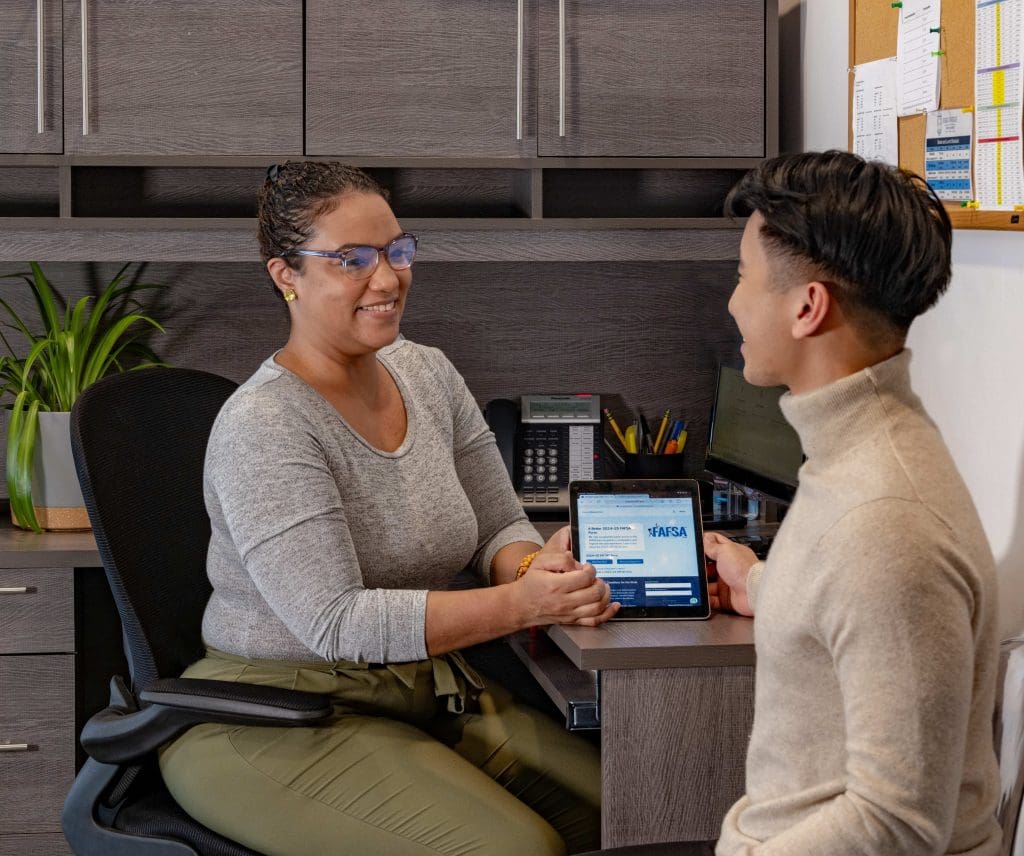
Accreditation also has a practical side for your budget. Under the U.S. Department of Education’s Federal Student Aid Handbook, a school generally must be accredited by a nationally recognized accrediting agency, and legally authorized by its state, to be eligible for federal student aid programs.
Accreditation is one of several conditions, so it does not mean that every accredited school offers federal aid, or that every student will receive it. When you compare schools, ask each one whether it participates in federal student aid programs and for its federal school code, which you list when you complete the FAFSA.
At Atelier Esthétique Institute of Esthetics, federal financial aid is available for those who qualify in our esthetics licensing programs. We participate in Title IV programs that include Pell Grants, Direct Student Loans, and Parent PLUS Loans, and our federal school code is 041787. Our guide to how much esthetician school costs walks through tuition, payment plans, and other ways to pay.
What Else to Compare Once the Credentials Check Out
A state license and accreditation tell you that a school meets baseline requirements. They do not tell you whether its schedule, training style, or location fits your life. The questions below help you tell licensed, accredited schools apart.
Schedules and Total Hours
In New York, licensing programs are measured in hours. If you have been searching for a 6-month esthetician program, ask how many approved hours it includes and how its calendar length is calculated. The esthetician license requires 600 hours of approved schooling, regardless of how the weeks are arranged. Then compare the days and times each schedule meets, whether theory is taught online, and how missed classes are made up. Our post on how long it takes to get your esthetician license shows how those hours fit different work weeks.
Supervised, Hands-On Practice
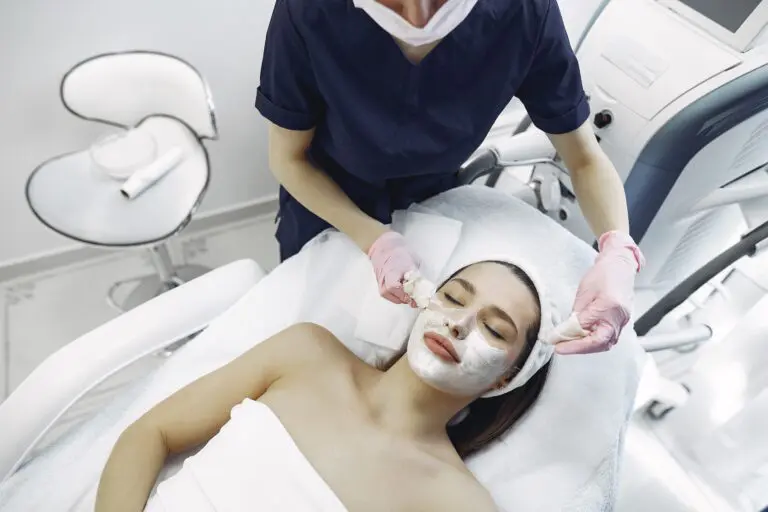
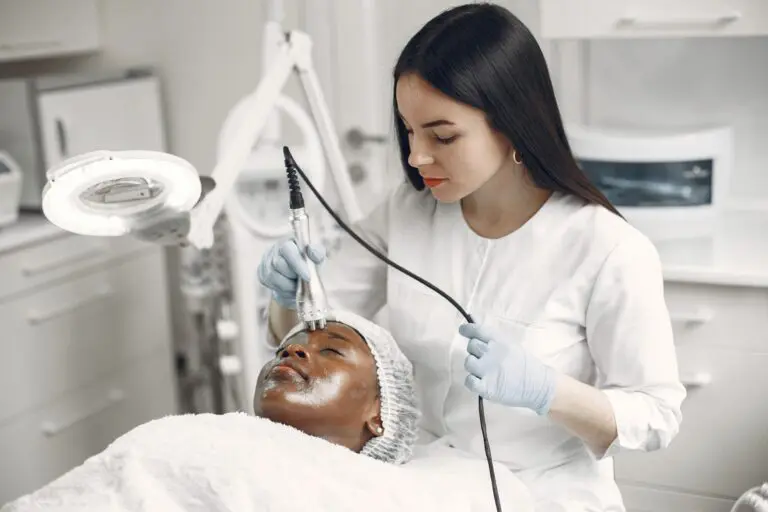
As an esthetician in training, you learn facials, waxing, makeup, and exfoliation by performing them while an instructor watches and corrects your technique. Ask how many students are in a practical class, when you begin working on real clients, and who supervises you when you do. Ask, too, whether the school runs a clinic open to the public, where students practice with clients who bring their own skin concerns and questions.
Location and Commute
Distance on a map matters less than your real commute. Time the trip at the hours your classes would start and end, check which subway, PATH, or bus lines stop nearby, and think about evenings and weekends if you choose a part-time schedule.
A Class Visit and the Paperwork
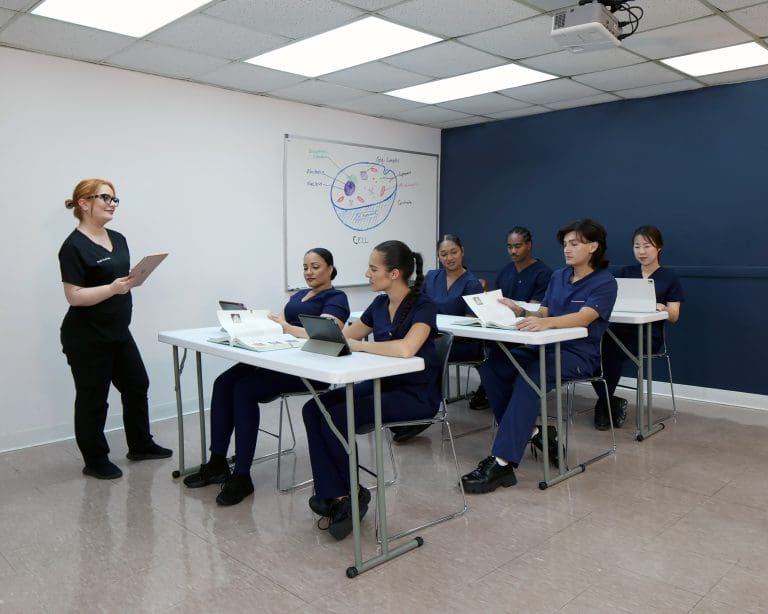
BPSS’s advice on choosing a school suggests asking to sit in on a class, touring the whole school, and talking with current students. It also recommends reading the enrollment agreement and refund policy before you sign, taking them home overnight if you need to, and asking anyone who recruits you to show a State Education Department agent certificate.
How Atelier Esthétique Answers These Questions
If you are comparing schools in Manhattan, here is how Atelier answers the checklist above, so you can verify each point yourself:
- Credentials: licensed by the New York State Education Department, Bureau of Proprietary School Supervision; accredited by NACCAS; and a member of the American Association of Cosmetology Schools (AACS), which is a professional association, not an accreditor. Our Accreditation page lists each one.
- Schedules: the 600-Hour Esthetics Program meets Monday to Friday, 9am to 5pm, on the Full-Time schedule, which can be completed in as little as 16 weeks. The 3-Day Half-Day schedule (Tuesday, Wednesday, and Thursday, 9am to 2pm) and the Evening/Weekend Hybrid schedule (Monday and Tuesday, 6pm to 9:45pm, plus Sunday, 9am to 5pm) can each be completed in as little as 40 weeks.
- Hands-on practice: practical classes have a maximum of 20 students, and theory classes a maximum of 30. Students train in two on-campus Educational Spas, and the school clinic is open to the public, with supervised students providing services.
- Location: 226 West 26th Street, 7th Floor, in Chelsea, Manhattan, about a 5-minute walk from Penn Station and the 23rd St PATH station. The C and E trains stop at 23rd Street and 8th Avenue, the 1 train at 23rd and 28th Streets on 7th Avenue, the F and M at 23rd Street and 6th Avenue, the N and R at 28th Street and Broadway, and the M20 bus at 26th Street.
- A first look: you can schedule a visit to sit in on a current class for an hour, and our campus and location page has directions and campus hours.
Licensing and accreditation are facts you can confirm in minutes. Whether an esthetician school fits you is something you judge in person, by watching a class, asking about schedules, and taking the trip you would make each week.
Bring Your Checklist to a Campus Visit
Look up every school on your list in the BPSS and NACCAS directories first, then visit the ones that pass with your questions about schedules, practice, and commute in hand. Book a Tour to see Atelier in Manhattan, sit in on a class, and talk through your options with our admissions team.
Thinking about starting your esthetics career?
Book a TourFrequently Asked Questions
It is a school that an accrediting agency recognized by the U.S. Department of Education has reviewed against its standards. For cosmetology and esthetics schools, one such agency is NACCAS. Accreditation is separate from the school’s state license, which in New York comes from the State Education Department’s Bureau of Proprietary School Supervision for private career schools.
The Department of State’s requirements ask for 600 hours of New York State approved schooling and passing the written and practical exams; they do not list accreditation. Accreditation matters in other ways, mainly because federal student aid generally requires it. Confirm both the school’s state license and its accreditation before you enroll.
Generally, no. Under federal rules, a school usually must be accredited by a nationally recognized agency, and authorized by its state, to take part in federal student aid programs. Accreditation alone is not enough, though, so ask each school whether it participates and for its federal school code before you complete the FAFSA.
To see your options, use the NACCAS Accredited School Search with New York as the state, then confirm each school’s license in the BPSS school directory. Atelier Esthétique Institute of Esthetics, at 226 West 26th Street in Chelsea, is licensed by NYSED BPSS and accredited by NACCAS, and it is about a 5-minute walk from Penn Station.
Start with what the work involves: esthetics is hands-on skin care, including facials, hair removal, and makeup, with a client in front of you. Then test it. Sit in on a class, visit the school’s clinic, and ask current students how their week is organized. If you leave curious rather than unsure, that tells you something useful.