How to Become a Licensed Esthetician in New York, Step by Step
9 min read
Moving into esthetics from another career usually starts with a simple question that soon gets complicated: which school, how many hours, which exams, and what comes after? You do not need prior beauty experience to begin, but you do need to follow New York’s steps in the right order.
The short list for how to become a licensed esthetician in New York: be at least 17, complete a 600-hour approved course of study, take a 1-hour course on domestic violence and sexual assault awareness, get a health certification, apply to the Department of State, and pass its written and practical exams.
Below, those requirements to be an esthetician in New York are arranged as five steps, in the order a career changer meets them: from deciding that esthetics is the right license to looking for your first position. Each step separates what the state requires from what a school provides.
Step 1: Decide That Esthetics Is the License You Want
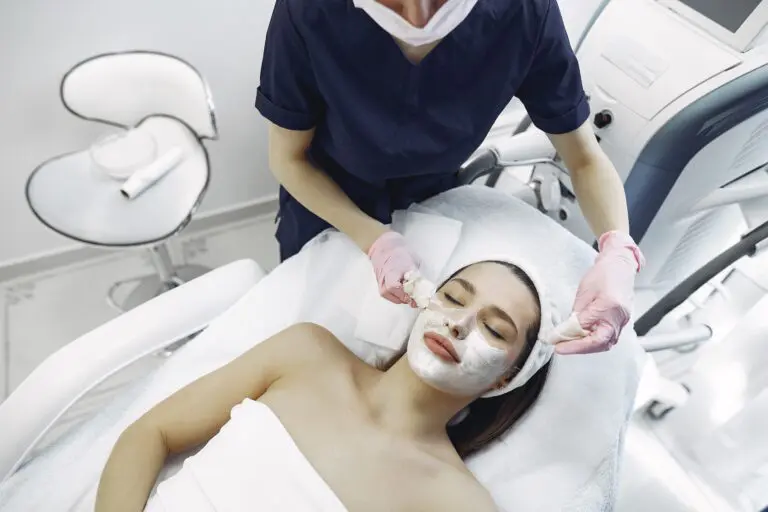
Before you compare schools, confirm that esthetics matches the work you picture yourself doing. The New York Department of State defines esthetics as services that enhance the appearance of the face, neck, arms, legs, or shoulders, using methods such as makeup, eyelashes, depilatories, lotions, waxes, and tweezing. In day-to-day terms, estheticians work with skin.
Cosmetology is the broader license. The state’s definition of cosmetology includes esthetics along with natural hair styling, nail specialty, waxing, and services such as cutting and coloring hair, and it requires a 1,000-hour approved course instead of 600. If hair is not part of your plan, esthetics is the more direct route. Our post on the difference between cosmetology and esthetics compares the two careers.
A few honest questions can help you decide:
- Do you want to work mainly with skin rather than hair or nails?
- Are you comfortable working close to clients, with your hands on their face and skin?
- Can you commit to a fixed class schedule for several months while you train?
If what draws you is mainly hair removal, New York also issues a separate waxing license. Our 75-Hour Waxing Licensing Course prepares students for it, and it can be a first step into the field.
Step 2: Choose a New York State Approved School
Your 600 hours only count if they come from an approved course of study. When you apply for your license, your school director completes a section of the application affirming your New York State approved schooling, so the school you choose becomes part of your license file, not just a place to take classes.
Online-only courses and certificates do not replace that approved training. Theory can be taught online in a hybrid program, but hands-on practice happens in person. Our guide to what esthetician school online can and cannot cover in New York explains where that line falls.
It also helps to keep two agencies apart. The New York State Education Department oversees schools, while the Department of State issues your license and runs the exams. When you compare schools as a career changer, three things usually matter most:
- Approval and accreditation: ask how the school is licensed and accredited. Atelier Esthétique Institute of Esthetics, for example, is licensed by the New York State Education Department, Bureau of Proprietary School Supervision, and accredited by NACCAS.
- A schedule you can keep: check whether there is a schedule that fits around your current job or family, and how long each one can take to complete.
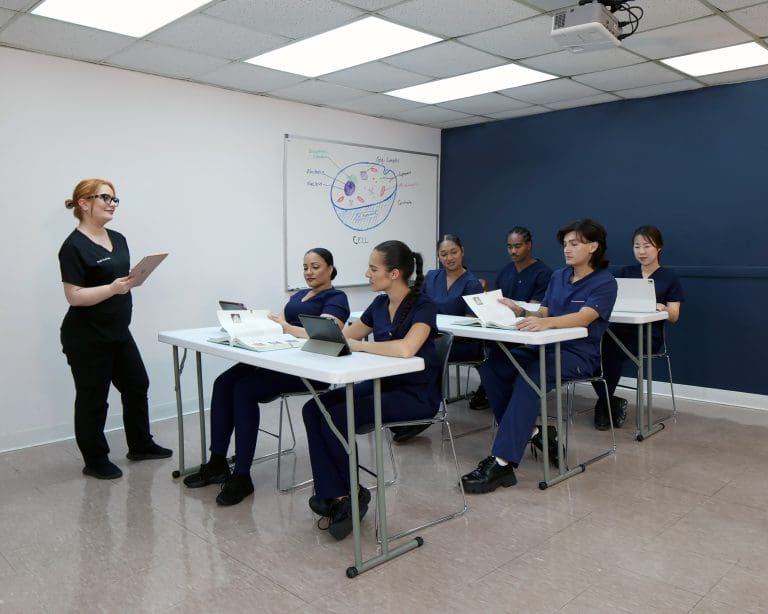
- A real look inside: visit the campus and ask to sit in on a class, so you can see how hands-on practice is supervised.
Step 3: Complete Your 600 Hours on a Schedule That Fits
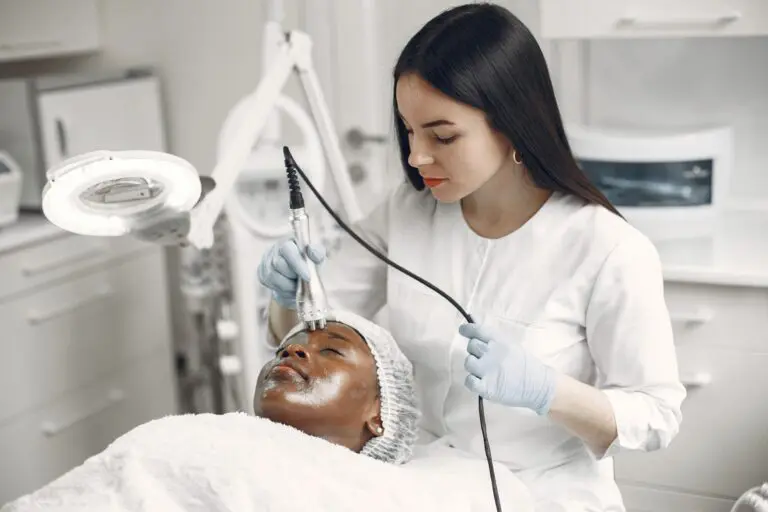
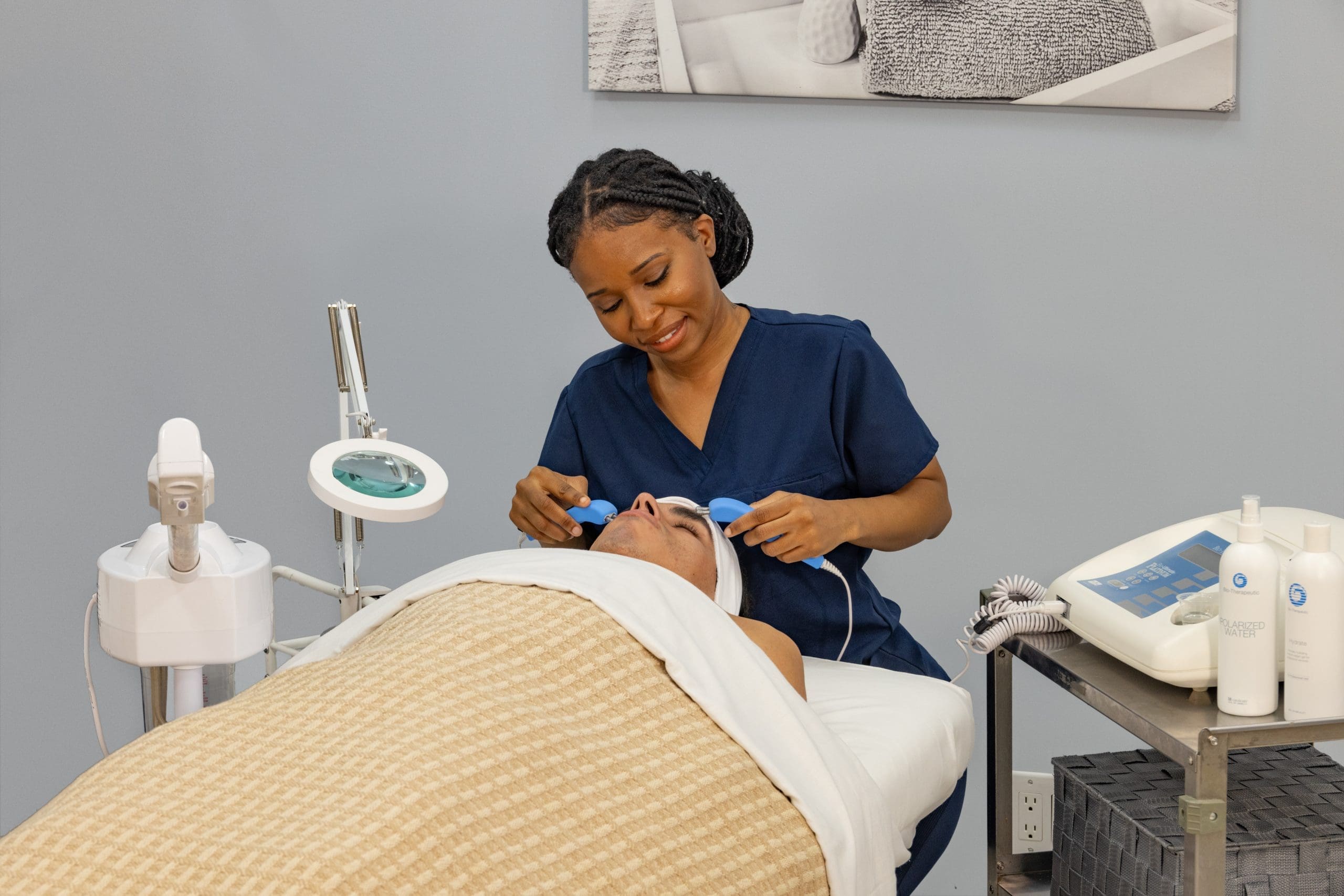
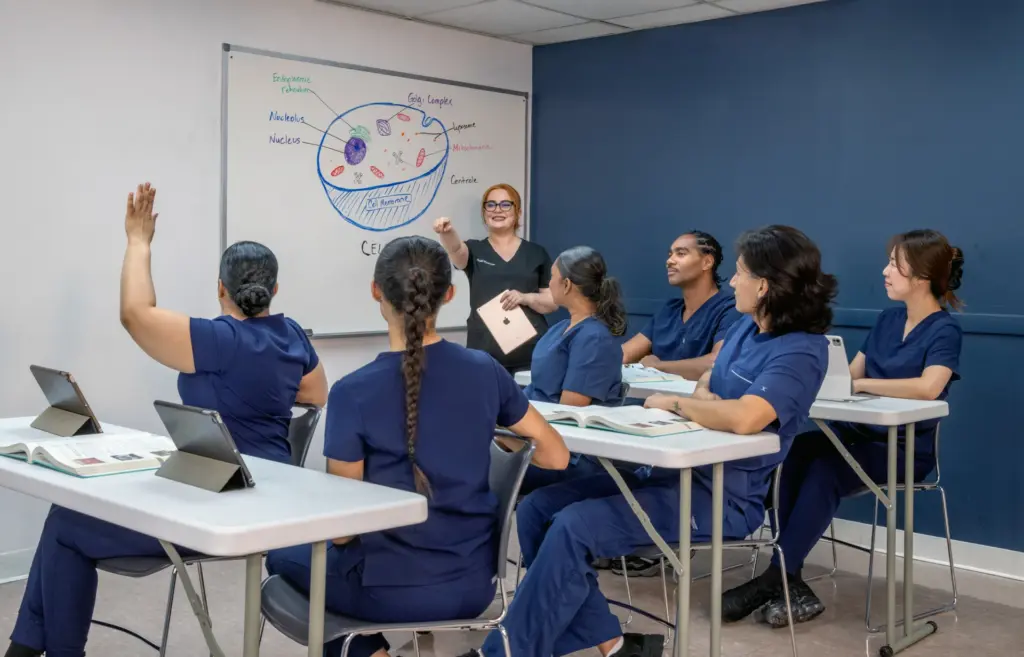
This is the longest step and the one you plan your life around. The 600 hours combine theory, such as skin anatomy, the chemistry of skin types, and infection control, with supervised practice in facials, body treatments, waxing, exfoliation, and makeup. At Atelier, the curriculum also covers client consultation and business skills like retailing, marketing, and entrepreneurship.
Our 600-Hour Esthetics Licensing Program runs on three schedules. In the hybrid format, theory is taught online and practical skills are taught in person at our campus in Chelsea, Manhattan.
| Schedule | Days and times | Can be completed in | May suit you if |
|---|---|---|---|
| Full-Time | Monday to Friday, 9am to 5pm | As little as 16 weeks | You can step away from work while you train |
| 3-Day Half-Day | Tuesday, Wednesday, and Thursday, 9am to 2pm | As little as 40 weeks | Your afternoons are free or you work part-time |
| Evening/Weekend Hybrid | Monday and Tuesday, 6pm to 9:45pm, plus Sunday, 9am to 5pm | As little as 40 weeks | You work a weekday daytime job |
Practical classes have a maximum of 20 students, and theory classes a maximum of 30. Theory and practice start on the first day, and during the last 300 hours students focus more heavily on hands-on work. Clinical experience takes place in our two on-campus Educational Spas, and the school clinic is open to the public, with supervised students providing the treatments.
Paying for school is part of this step too. Financial aid is available for those who qualify for the 600-hour program; our Financial Aid page explains the options and how to apply.
Step 4: Apply for Your License and Take the State Exams
Once your training is complete, the process moves to the Department of State, which issues the NYS esthetics license. Here is how to get your esthetician license from that point, in summary:
- Get a health certification from a physician, physician assistant, or nurse practitioner. Your application must be submitted within 30 days after it is signed and dated.
- Complete the 1-hour Domestic Violence and Sexual Assault Awareness course before you submit your application.
- Apply online through the state’s Business Express portal or with the paper Esthetics Application, including your school director’s affirmation of your approved schooling.
- After your application is reviewed and accepted, you receive details on the exams and schedule them through your online account.
- Pass the written exam, a multiple-choice test based on the pre-licensing curriculum, and the practical exam at a state examination site.
Written exam results are reported only as pass or fail, and you are notified by email. Fees, exam locations, and the full application forms are listed on the Department of State’s Become an Esthetician page, the source to check before you apply. If you trained in New York, the same page lists a temporary license among your options.
Preparation for both exams starts in school, long before test day. Our post with tips for the New York esthetician licensing exam covers how students practice for the written test and get their kit ready for the practical.
Step 5: Plan Your First Job as a Licensed Esthetician
With a New York esthetician license, you can pursue roles in spas, salons and skincare settings, makeup artistry, and clinical roles in medical settings. Where you start depends on the services you enjoy, the hours you need, and the local job market, so it helps to think about direction while you are still in school.
Your previous career can count here. Experience in customer service, sales, or managing a calendar can carry over to client consultations, product recommendations, and building a client list, which are part of the business skills taught in the program.
At Atelier, career services support students and graduates as they look for work, and guest lecturers speak with students about employment and business topics. We assist you in finding a position; however, a job is not something any school can promise.
Two more points for planning ahead. An esthetics license does not let you operate your own business; that requires a separate business application and license from the state. And once you are licensed, you can add skills through advanced courses such as dermaplaning or laser hair removal.
Where to Begin This Week
You do not need every answer before you start. A practical first week could be this: read the state’s requirements, decide whether esthetics or cosmetology fits your plans, and pick the schedule that could work with your current job.
Then see an esthetician school in person and bring your questions about hours, exams, and financial aid for those who qualify. Book a Tour to visit Atelier in Chelsea, Manhattan, meet our Admissions team, and ask to sit in on a class.
Thinking about starting your esthetics career?
Book a TourFrequently Asked Questions
The training itself is 600 hours. At Atelier, the 600-hour program can be completed in as little as 16 weeks on the Full-Time schedule, or in as little as 40 weeks on the 3-Day Half-Day and Evening/Weekend Hybrid schedules. After that, allow time for the state to review your application and for both exams to be scheduled.
According to the Department of State, esthetics covers services that enhance the appearance of the face, neck, arms, legs, or shoulders, including makeup, eyelashes, depilatories, tonics, lotions, waxes, sanding, and tweezing. It does not include electrology, and the license alone does not let you operate a business: that requires a separate business license.
No prior esthetics experience is needed to enroll at Atelier, and the program does not ask for a college degree. You do need a high school diploma or equivalent to apply, and the state requires you to be at least 17 to apply for an esthetics license. Skin science, treatments, and client consultation are taught in the program.
In New York, the Department of State’s definition of cosmetology includes esthetics, along with natural hair styling, nail specialty, waxing, and hair services. A cosmetology license requires a 1,000-hour approved course, compared with 600 hours for esthetics, so if you only want to work with skin, the esthetics license is the more direct path.
At Atelier, two schedules are built around other commitments. The Evening/Weekend Hybrid meets Monday and Tuesday evenings plus Sundays, and the 3-Day Half-Day meets Tuesday through Thursday from 9am to 2pm. Both can be completed in as little as 40 weeks. Talk with Admissions about which one fits your work hours before you enroll.