How Long Does Laser Hair Removal Last? Sessions, Series, and Results
10 min read
If you’re asking how long laser hair removal lasts, you’re probably planning around something: a trip, a wedding, a busy season at work, or a budget for the year ahead. Planning goes more smoothly once you know the question has three answers, each running on its own clock.
How long does laser hair removal last? One session can take minutes for the upper lip or more than an hour for the back or legs. For a full series, most people need 2 to 6 sessions, usually 4 to 6 weeks apart. After the series, most people stay hair-free for months or even years, and some need maintenance.
Below, we break down each timeline with guidance from the American Academy of Dermatology (AAD) and the FDA and show how a series maps onto a calendar. If your main question is whether the hair is gone for good, our post on whether laser hair removal is permanent covers that in depth.
Three Timelines Behind One Question
“How long” can refer to the appointment, the treatment plan, or the result. Here is how the three compare, based on the AAD’s laser hair removal FAQs:
| Timeline | What the AAD says | What it means for your plan |
|---|---|---|
| One session | The upper lip takes minutes; a large area like the back or legs may take more than an hour. | Book time for the area, plus extra if a numbing gel is used. |
| The full series | Most patients need 2 to 6 treatments, usually one every 4 to 6 weeks. | The plan runs for months, not weeks. |
| The results | Most patients remain hair-free for months or even years; maintenance treatments may be needed. | Leave room for touch-ups in your calendar and your budget. |
Each timeline depends on you as much as on the laser. The AAD names the color and thickness of your hair, the area treated, the type of laser used, and the color of your skin as factors that affect results, so treat any number here as a starting range for a conversation with your provider.
How Long Does a Laser Hair Removal Session Take?
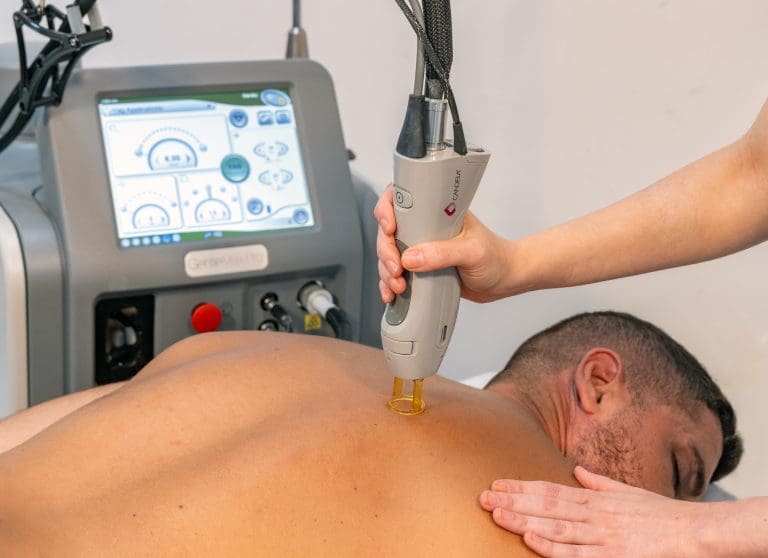
The treated area sets the pace. According to the AAD, treating the upper lip takes minutes, while a large area like the back or legs may take more than an hour. A few steps also happen before the laser is used, so plan for an appointment that runs longer than the treatment itself.
What Fills the Appointment
- A consultation on your first visit, where the AAD suggests asking how many treatments you’ll need and what results to expect.
- Preparation: the treatment area is cleaned first.
- Numbing gel, if used: the AAD notes that it is most useful for small, very sensitive areas and takes about 30 to 60 minutes to work.
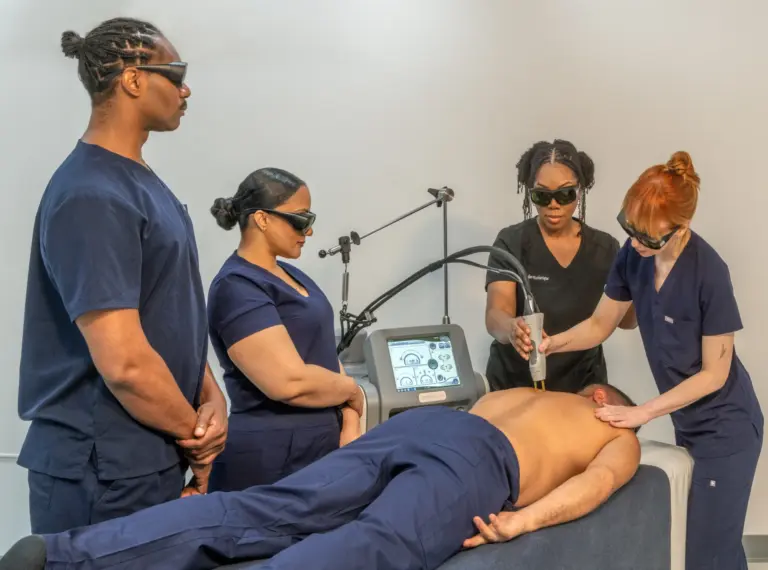
- Safety setup: treatment happens in a room set up for lasers, and everyone in the room wears protective eyewear.
After the Session
The AAD says there is generally no real downtime: treated skin is red and swollen right afterward, but most people return to their everyday activities. The most common side effects are minor and last 1 to 3 days, a window worth building into your schedule if the treated area will show at an event.
Session Length by Body Area
The AAD’s overview lists the armpits, back, bikini area, chest, face (especially the upper lip and chin), legs, neck, and shoulders as treatment areas, but its guidance gives timing for only some of them:
- Upper lip: a small area that takes minutes.
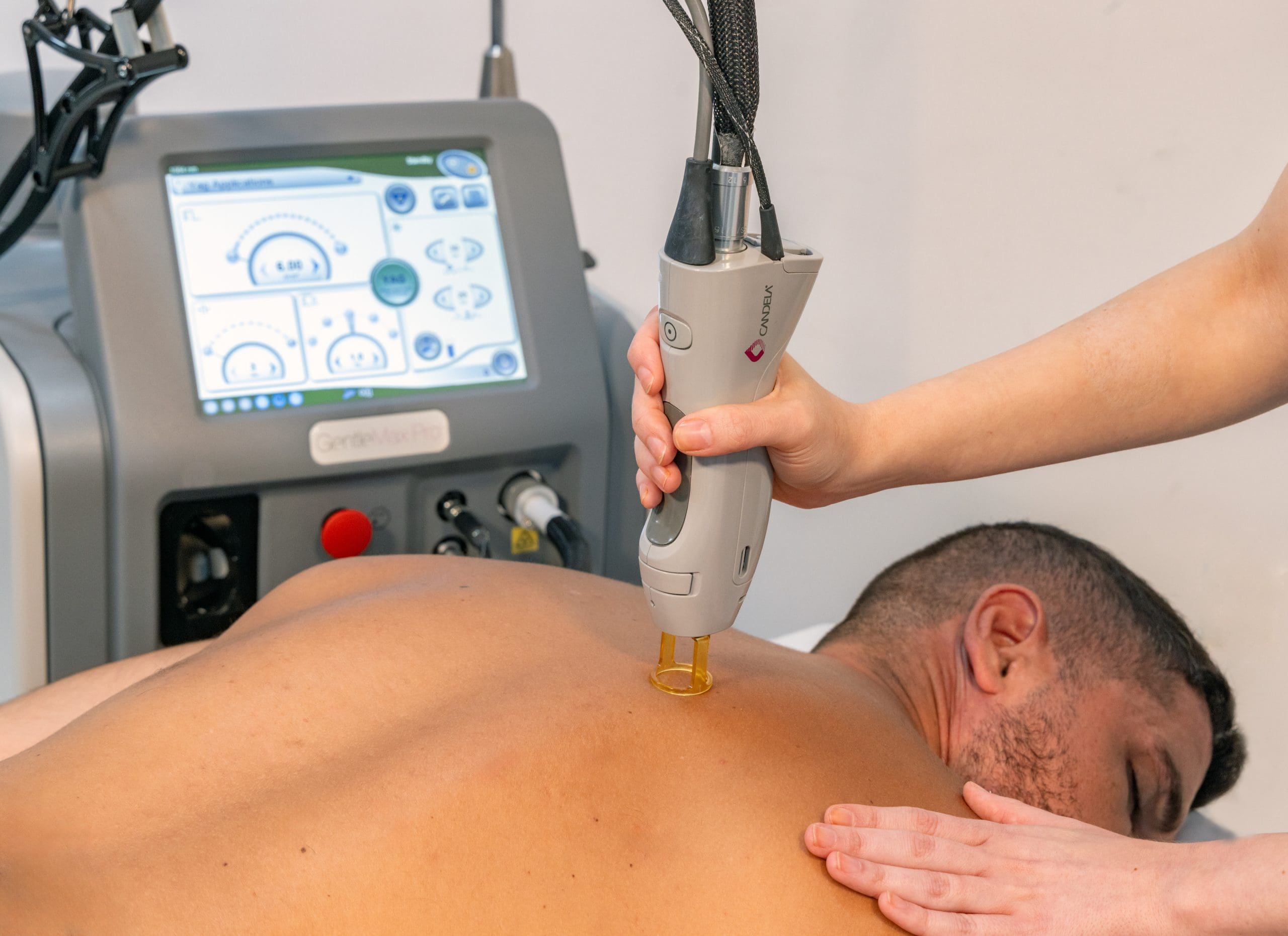
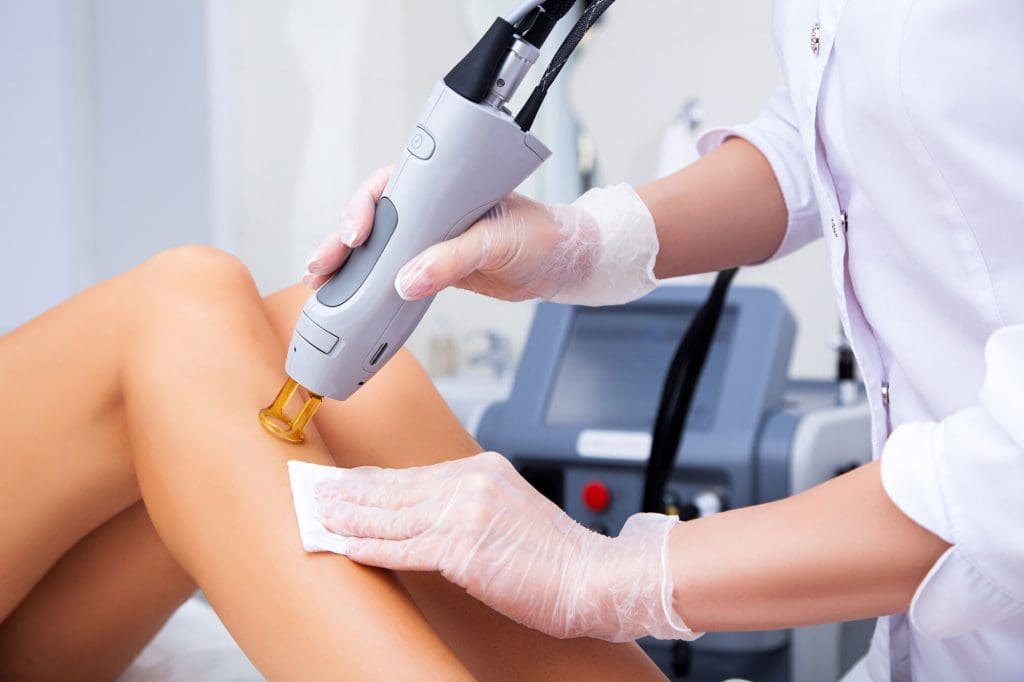
- Back and legs: large areas where a session may take more than an hour.
- Armpits, bikini area, chest, neck, and shoulders: the AAD publishes no session times or counts, so ask your provider for an estimate based on your hair and skin.
How Many Sessions You’ll Need and How Far Apart
The AAD’s FAQ page says most patients need 2 to 6 laser treatments, while its overview says removing unwanted hair can take 6 sessions or more. Read together, the message is that the count is personal: your provider estimates it after seeing your skin and hair.
The spacing is more predictable. Most patients can have laser hair removal once every 4 to 6 weeks, according to the AAD, and the provider decides when the next treatment is safe. For a look at how laser light reaches the hair follicle, see our post on the science behind laser hair removal.
Mapping a Series on Your Calendar
A little math turns those ranges into dates. Six sessions mean five gaps between them; at 4 to 6 weeks per gap, the last session lands roughly 20 to 30 weeks after the first. Fewer sessions shorten that span, and more sessions extend it. A few planning choices follow from that:
- Sun and seasons: the AAD advises avoiding tanning and self-tanning products and wearing a broad-spectrum, water-resistant sunscreen with an SPF of 30 or higher every day, so a series that runs through summer means months of steady sun protection.
- Events: schedule sessions so the 1 to 3 days of common redness and swelling fall well before a date that matters, and ask your provider where your last session should land.
- Your routine: appointments repeat for months, so choose a provider and appointment times you can keep.
- Flexibility: each next date depends on how your skin responded, so treat your calendar as a draft until your provider confirms it.
How Long Results Last After Your Final Session
According to the AAD, most patients remain hair-free for months or even years after a completed series. Here is how results build along the way:
- Right after a session: results may be visible immediately, though they vary from person to person.
- After the first treatment: a 10% to 25% reduction in hair is typical.
- After the full series: when hair regrows, there tends to be less of it, and it is usually finer and lighter in color.
- 6, 9, and 12 months later: these are the points at which FDA clearance documents for the Candela GentleMax family of lasers, which includes the GentleMax Pro our students train on, measure permanent hair reduction after a treatment regimen is complete.
- Whenever hair returns: maintenance laser treatments may be needed to keep the area free of hair.
That FDA yardstick is a fair frame for your own expectations: judge your results by regrowth over the months after your final session, not by the days right after it.
When Maintenance Sessions Come In
None of the sources we reviewed sets a fixed maintenance schedule. The AAD’s overview says laser hair removal can be repeated when the hair regrows, so touch-ups follow your own regrowth, and your provider tells you when one is safe. Facial areas need the most planning: because of hormones, the AAD says laser hair removal is not permanent on a woman’s face, so budget for maintenance from the start.

Timing Questions to Ask Before You Book
A consultation is where general ranges become your own plan. Along with the questions the AAD suggests, these can help you leave with dates you can use:
- How many sessions do you expect for this area, and how far apart will we schedule them?
- How long will each appointment take, including any numbing gel?
- If I have an event coming up, when should my last session be?
- How should I protect the area from the sun between sessions?
- How will we decide whether, and when, I need maintenance?
A provider who can answer these questions is drawing on core topics of professional laser training: client assessment and consultation, laser settings and charting, and pre- and post-care. The chart, in particular, is what carries your plan from one session to the next.
Training to Provide Laser Hair Removal in New York
If the provider’s side of the treatment room interests you, Atelier Esthétique Institute of Esthetics offers a Laser/IPL Hair Removal course that runs for five days, Monday through Friday. It is one of our two advanced courses approved by the New York State Education Department, and students practice on live models using the Candela GentleMax Pro.
The course is open to licensed estheticians and cosmetologists experienced in skin care, licensed RNs, LPNs, physician assistants, physicians, certified electrologists, licensed massage therapists, and licensed acupuncturists, and it awards two New York State Education Certificates. Our guide on how to become a laser hair removal technician explains which New York licenses cover the service.
Not licensed yet? NYC’s only 900-hour Master Esthetics Program combines the 600-hour licensing curriculum with 300 hours of advanced training, and its seven specialty certifications include Laser Hair Removal with Laser Safety Certification. Keep in mind that the New York State license covers the first 600 hours; the additional 300 hours are recognized with school certificates of completion.
If you’d rather start with hair removal, our waxing school offers the 75-Hour NY Waxing licensing course, which prepares students for the New York waxing license and can be completed in as little as 2 weeks on the full-time schedule. A waxing license is not on the eligibility list for our Laser/IPL course, so the path to laser training later runs through one of the listed licenses, such as esthetics.
Book a Tour of Atelier in Chelsea, Manhattan, where our campus includes two educational spas, and bring your timeline questions with you.
Thinking about starting your esthetics career?
Book a TourFrequently Asked Questions
According to the American Academy of Dermatology, most patients can have laser hair removal once every 4 to 6 weeks. The exact timing is your provider’s call: they decide when the next treatment is safe after checking how your skin responded, so any schedule you set at the start works best as a draft.
Some results can show early, but the full picture takes a series. The AAD says a 10% to 25% reduction in hair is typical after the first session and that most patients need 2 to 6 treatments. FDA clearance documents measure lasting reduction at 6, 9, and 12 months after a treatment regime ends.
The AAD lists both among common treatment areas but does not publish session counts by area. Its general guidance is 2 to 6 treatments for most patients, and its overview notes that it can take 6 sessions or more. Hair color and thickness, skin color, and the laser used all affect the count, so ask your provider for an estimate.
Generally, no real downtime is needed, according to the AAD. Treated skin is usually red and swollen right afterward, but most people return to their everyday activities, and the most common side effects are minor and last 1 to 3 days. The AAD also advises keeping treated skin out of direct sunlight and avoiding tanning beds.
There is no fixed schedule. The AAD says maintenance laser treatments may be needed to keep an area free of hair and that treatment can be repeated when hair regrows, so touch-ups follow your own regrowth. Facial areas call for more planning: because of hormones, the AAD says results are not permanent on a woman’s face.